
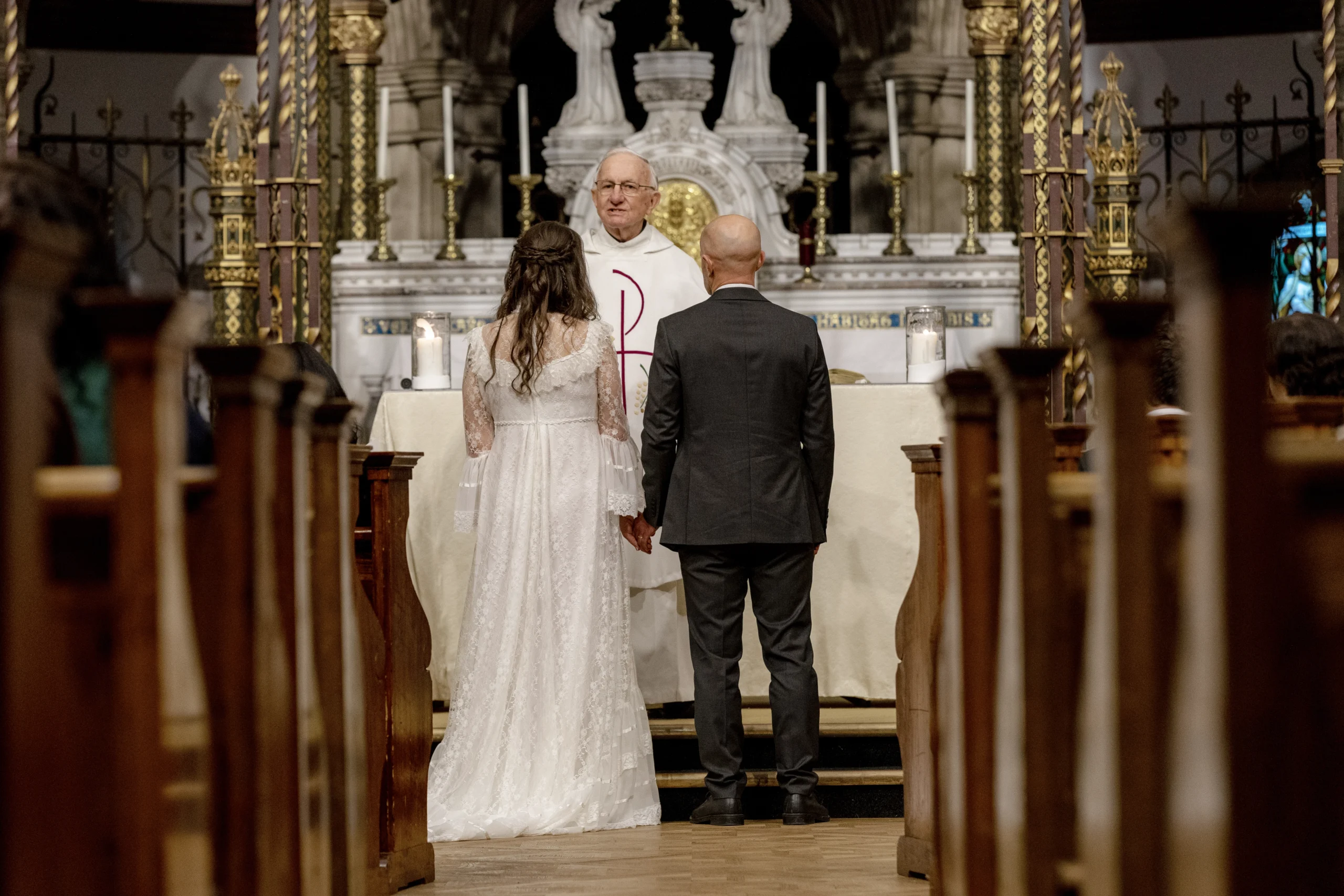
A church or historic ceremony room can bring a wonderful atmosphere to your wedding. You may love the architecture, the quiet sense of occasion or the way the space holds your closest family and friends together. If the room is darker than some of the wedding photographs you’ve seen online, it’s quite natural to wonder how that will affect your own pictures.
The light is something I plan for, alongside the layout and the arrangements for your ceremony. It doesn’t need to become something you spend the day thinking about. Understanding the setting beforehand helps me photograph it thoughtfully while keeping your ceremony at the centre of what is happening.
I’m Emma Lowe, a full-time wedding photographer based in Rugby, Warwickshire, working across the Midlands. My weddings include churches, historic houses and civil ceremony rooms, each with its own character and practical considerations.
Understanding the ceremony arrangements
Before the wedding, it helps to know who is conducting your ceremony and whether they have given you any photography instructions. There may be particular places where I can stand, moments when movement is appropriate or restrictions on additional lighting.
These details are worth discussing early because they influence the photographs that are possible. A clear understanding allows me to work around the ceremony respectfully, rather than interrupt its flow or make assumptions about access.
For a Church of England wedding, the Church of England’s guidance on professional photography recommends speaking with the vicar beforehand and putting the photographer and vicar in touch. Other churches and civil ceremony venues have their own arrangements, which we can confirm with the relevant person.
Photographing a church ceremony quietly
During the ceremony, I’m watching for the moments that mean something to you: the anticipation before you see one another, your expressions during the vows and the reactions of the people nearby. I want to photograph those moments without asking you to think about the camera.
The layout affects where I can work and which views are available. Some spaces allow discreet movement between positions, while others require me to remain in an agreed place for much of the service. Knowing that beforehand helps set sensible expectations.
At Ash and Mary’s wedding, I photographed their ceremony in the chapel at Princethorpe before their reception at the Saxon Mill. The chapel and reception brought quite different settings to their photographs, with the ceremony coverage fitting around the service itself.
Afterwards, there was a limited window for the group photographs before everyone travelled. Their day shows why the ceremony arrangements and the wider schedule are useful to discuss together.
Working with the character of a darker room
A room with dark wood, coloured furnishings and softer lighting will naturally look different from a bright glass-filled space. Those characteristics may be part of what drew you to it, so the aim is to photograph the people clearly while keeping a sense of the setting.
For Dave and Annette’s wedding at Kilworth House in Leicestershire, their intimate ceremony took place in the Shakespeare Room with around 20 guests. Its darker wood and warm lighting created a very different atmosphere from an outdoor ceremony.
During their day, I used flash indoors where appropriate and also photographed in other areas of the venue and grounds. The approach changed with the setting, allowing their gallery to include the different parts of the celebration. You can explore more of my work there on my Kilworth House wedding photography page.
Natural photographs can involve different lighting approaches
When I describe my wedding photography as natural, I’m talking about the feel of the photographs and the moments within them. It doesn’t mean that I use only daylight in every situation. A ceremony, a family portrait and an evening dance floor may each call for a different approach.
During some ceremonies, I work entirely with the available light. At other points in the day, additional lighting can help me photograph people clearly while keeping the setting recognisable. Those decisions depend on the room, the conditions and what is permitted.
At Lucy and Stephen’s wedding at Cheylesmore Manor House, I photographed their ceremony without flash, while their later reception involved a different lighting arrangement. It’s an example of adapting within one wedding rather than applying the same method throughout.
You can read more about the balance between natural moments and gently guided portraits on my wedding photography style page.
Finding space for portraits and family photographs
Once the ceremony has finished, we can think a little differently about where photographs happen. A window, doorway or quieter room may be lovely for portraits of the two of you, while family groups need enough space for everyone to gather comfortably.
It helps to know which areas will be available and for how long. A ceremony room may need to be prepared for the meal, or another service may follow in a church. Your venue or ceremony team can explain those arrangements so we can make a realistic plan.
If you’re moving to another location afterwards, we can decide which photographs make sense before guests leave and which would work better at the reception. My wedding group photography guide explains how a named shortlist helps us organise this part of the day.
Allowing for the season outside
An indoor ceremony doesn’t mean all your photographs need to stay indoors. If you would love portraits in the church grounds or outside your venue, we can consider those alongside the ceremony time and the daylight available.
For a winter wedding, the opportunity outside may be shorter, particularly if you also have a journey to the reception. My winter wedding photography guide explains how we can plan around that without making the afternoon feel hurried.
We’ll also consider somewhere comfortable if it rains. Having a suitable alternative means your family photographs and portraits don’t depend entirely on the weather, as I discuss in my wet-weather wedding photography guide.
Looking at experience across a whole wedding
If you’re choosing a photographer for a church or darker venue, a fuller wedding selection can be especially helpful. You’ll be able to see the ceremony, family groups, portraits and reception, rather than judge the approach from a single image made in completely different conditions.
You’re welcome to browse my recent weddings and tell me which settings feel similar to yours. My guide to choosing a wedding photographer also explains the conversations that can help you feel comfortable with your decision.
Let’s talk about your ceremony
If you’ve chosen a church, register office or indoor venue, I’d love to hear what you like about it. Knowing the setting, ceremony time and any arrangements you’ve already discussed gives us a useful starting point for your photography.
I’m based in Rugby and photograph weddings across Warwickshire and the wider Midlands. You can get in touch with your wedding date and venue, and we can talk through how I would approach your day. My Emma Lowe Photography supplier profile on Hitched is also available if you’re using that platform for your planning.