
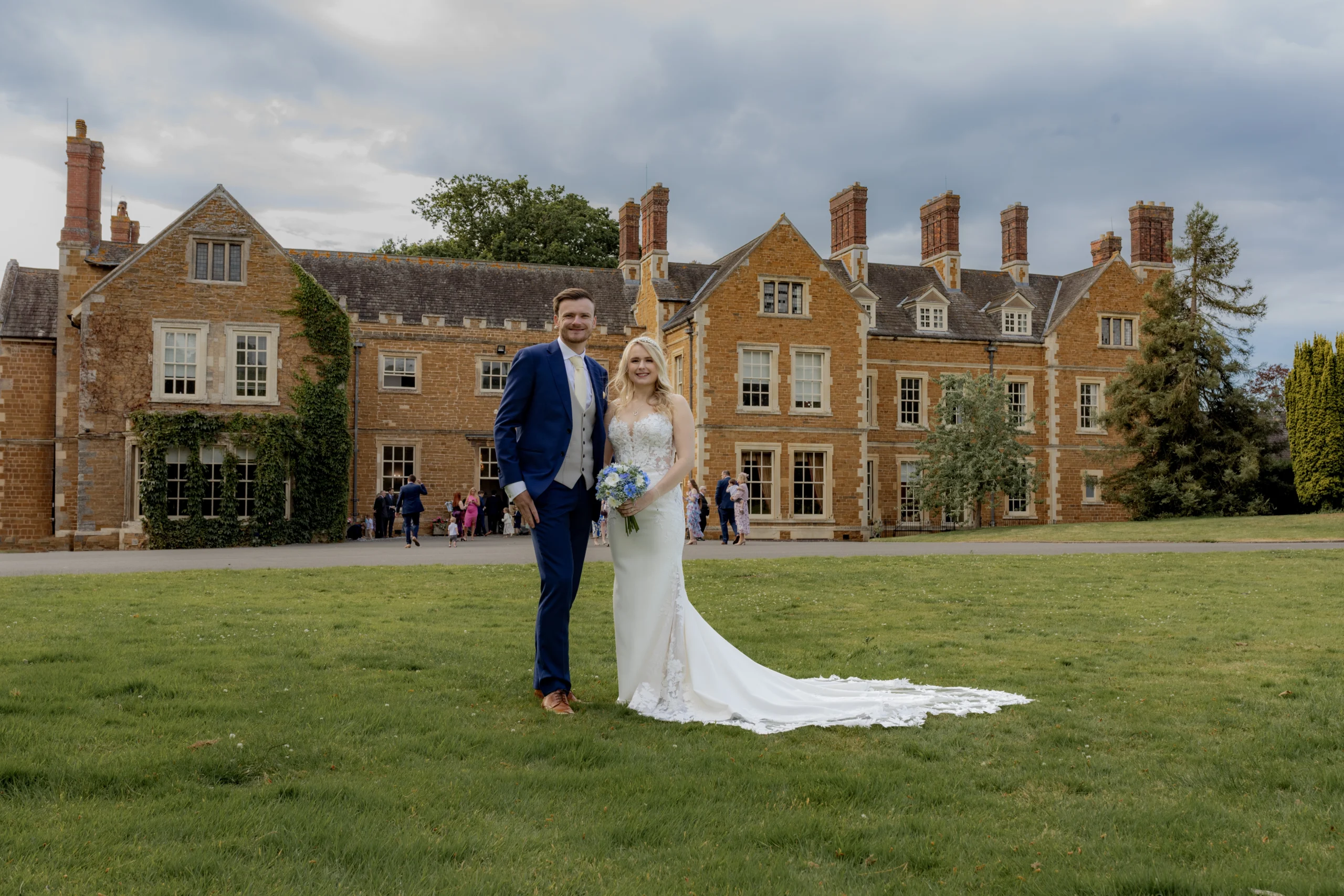
Choosing your wedding venue is often the moment your plans start to feel real. You can picture walking into the ceremony, celebrating with your guests and finding a little time together in the grounds. It’s completely understandable to fall in love with the setting, although the way a venue feels and works for your wedding matters just as much as how it looks in a photograph.
As a wedding photographer based in Rugby, Warwickshire, I photograph celebrations across the Midlands, from intimate ceremonies to larger country-house weddings. I’ve worked in very different spaces, and there isn’t one type of venue that produces beautiful photographs. What helps is understanding the setting and planning around the day you want to have.
These are some of the things I would gently encourage you to consider as you visit venues. You don’t need to assess them like a photographer; they’re simply useful conversations to have while you imagine yourselves there.
Start with the atmosphere you would love
A grand staircase, a quiet garden and a lively barn reception can each bring something lovely to a wedding. The right choice depends on what feels comfortable and meaningful to you. If you can imagine enjoying yourselves in the space, that is a good place to begin.
Your photographs will reflect more than the architecture. They will include the people you love, the way you celebrate and the details you have chosen. A smaller, familiar setting can hold just as much feeling as an impressive country house, so you don’t need to choose a venue purely for a particular portrait backdrop.
Picture how the whole day will fit together
During a viewing, it helps to imagine moving through the venue as the wedding unfolds. Where will you get ready? Where will guests gather after the ceremony? Will the same room need to be rearranged before the meal, and where will everyone spend that time?
These arrangements influence when and where photographs fit comfortably. If your chosen portrait spot is a long walk from the reception, we’ll need to allow for that. If there are attractive places nearby, we may be able to make lovely portraits without taking you far from your guests.
The wider practicalities still matter too, including guest numbers, catering arrangements, accommodation and what is included in the venue hire. Your coordinator or planner, if you have one, can help you understand how those pieces fit together. From my side, I can help you think through the photography within that plan.
Getting to know the ceremony space
The ceremony room will be the setting for some of your most meaningful photographs, so it deserves a little attention alongside the gardens and reception spaces. If you can see it at a similar time to your planned ceremony, you may get a better sense of the light and atmosphere.
Some rooms have large windows and plenty of daylight; others feel warm and intimate, with darker furnishings or softer lighting. Neither needs to rule a venue out. It simply helps me understand the conditions and any restrictions on movement or flash during the ceremony.
Dave and Annette’s wedding at Kilworth House in Leicestershire is a lovely example of an intimate setting. Their ceremony in the Shakespeare Room, with around 20 guests, had dark wood and warm, coloured lighting. It brought a very different atmosphere from a bright outdoor ceremony, and the photography needed to respond to that room.
If you’re considering a similar setting, my guide to church and indoor wedding photography explores the practical considerations in more detail.
Feeling happy with the indoor option
It’s easy to picture your wedding in the gardens when you visit on a sunny afternoon. I’d also encourage you to look at the indoor spaces with the same care, so you know you would still feel happy and comfortable if the weather changed.
A room that works beautifully for two people may not accommodate a larger family group, and an attractive staircase may need to remain clear at certain times. Your venue team can explain which spaces will actually be available when we need them.
At Celine and Samuel’s Bourton Hall wedding, afternoon showers meant we took the family photographs on the grand staircase indoors. When the weather cleared, we went outside for couple portraits. Having somewhere suitable inside allowed us to keep the day moving while still enjoying the grounds later.
You can see more of the setting on my Bourton Hall wedding photography page, and there are further ideas in my wet-weather photography guide.
Considering the season as well as the setting
A venue can feel quite different between a summer evening and a winter afternoon. The grounds may still be beautiful in winter, but the available daylight will affect when we can use them. In summer, we may be thinking more about shade and comfortable places for family photographs.
If your viewing takes place in a different season from your wedding, the venue may be able to show you photographs from a similar time of year. We can then talk about a realistic plan for your ceremony, portraits and reception, rather than expecting the light to match your viewing.
My winter wedding photography guide explains how shorter days can influence the schedule without losing the warmth and atmosphere of a winter celebration.
Making the experience comfortable for your guests
Beautiful grounds are wonderful, but it helps to think about how easily your guests can enjoy them. Steps, gravel paths and long walks may affect where we gather for photographs, particularly if someone has limited mobility or would find standing for a while uncomfortable.
We can usually make thoughtful arrangements once we know what people need. That might mean choosing a closer location, taking certain family photographs earlier or finding somewhere a relative can sit comfortably. These details belong in the planning conversation so they don’t become something you have to organise on the day.
When your ceremony and reception are in different places
A church or registry office ceremony followed by a reception elsewhere can give your photographs lovely variety. The two settings don’t need to look alike. What matters is leaving enough room in the schedule for travelling, parking, greeting people and settling into the next part of the day.
We can decide together which photographs make sense at each location. My guide to planning your wedding photography explains how I help couples work through those timings.
Choosing somewhere that feels like your wedding
The venue is the setting for your celebration, and I want you to feel able to enjoy it. A little preparation helps us make the most of its character while keeping your photographs comfortably within the day.
You’re welcome to browse my recent wedding photography pages for examples of places I’ve photographed. If you’ve found your venue, or have a shortlist and would like to talk about the photography, send me a message with your plans. I’d love to hear what has caught your eye.